The Harness Engineering cheat sheet and agent requirements template
Harness Engineering webinar27 October 2026OnlineNicole Koenigstein
Two practical resources from the Harness Engineering session with Nicole Koenigstein: a guide to what the harness controls and how its parts affect each other, and a template for planning your own agent before you build it.
Get both resourcesWhat's in the pack
The cheat sheet
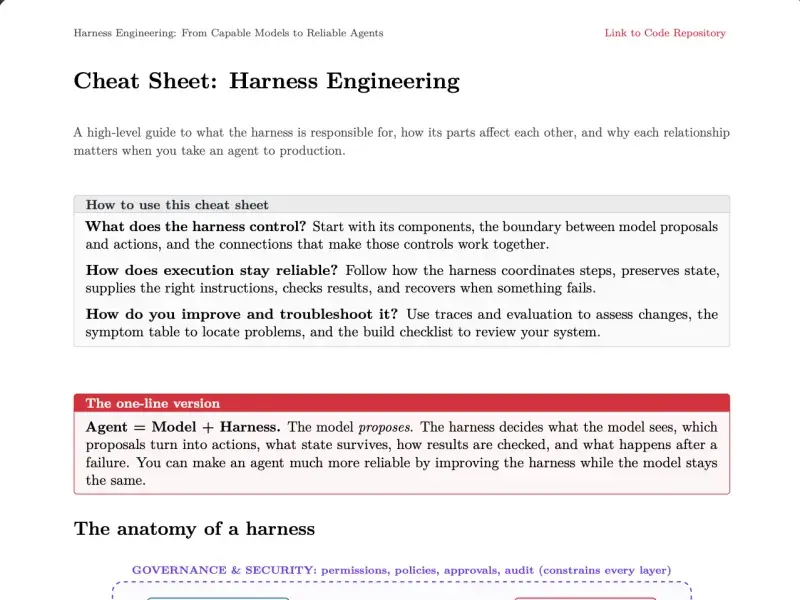
Nicole Koenigstein's guide to what the harness controls and why each part matters in production, from state and repair loops to a troubleshooting table and build checklist.
The agent requirements template
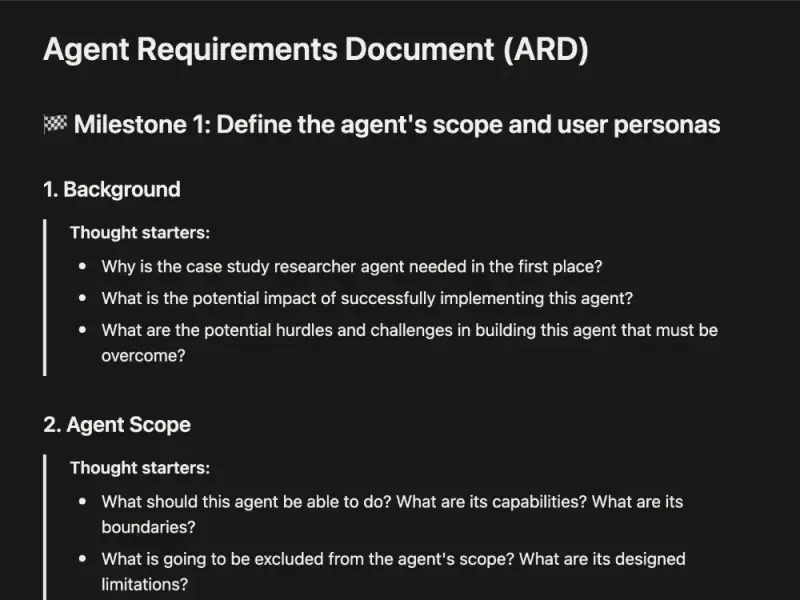
Ali Parandeh's template for planning an agent's functional, performance, reliability and security requirements before you write code, ready to hand to Claude Code or Codex.
The model proposes. The harness decides.
When an agent misbehaves, the usual fix is a better prompt or a bigger model. Nicole's argument is that neither touches the real problem. The model only proposes the next step. The harness decides whether that step is allowed, what state survives it and how the result gets checked.
Prompts and context can influence a model. Only the harness can enforce anything.
Prompt, context, harness
Three kinds of engineering that often get lumped together. Prompt engineering tunes a single call. Context engineering manages what the model sees across steps. Harness engineering covers the whole system around it. Nicole runs one incident ticket through all three to show what each can see, and what each can actually stop. That walkthrough is in the recording.
Six parts, one loop
The harness Nicole describes has six parts: governance, the model, tools and environment, state and traces, orchestration, and verification and evaluation. They work as a closed loop, and her ablation notebooks show what happens to the whole system when you take any one of them out.
The cheat sheet maps how the parts affect each other, with a symptom-to-cause table for when something goes wrong.
Skills will not make your agent deterministic
Skills are useful, but a skill is a procedure, not a guarantee. The model running it is still probabilistic, so it needs the harness to enforce, verify and repair around it. Nicole makes the case for treating skills as organisational assets, reviewed and versioned like anything else you ship, and shows why: a public skill that quietly sent users' cloud credentials elsewhere.
Check the cheap things first
Verification costs time and tokens, so the order of checks matters. Nicole sets out five types of check, cheapest first, with deterministic gates that run before any model judges the output and repair loops that stop after a set number of retries. Without that limit, a simple landing page can cost $30 in retries.
The cheat sheet covers the verification and repair loops. The recording goes through all five checks.
How much harness do you get for free?
A question from the Q&A. Claude Code and Codex give you part of a harness: security settings, allow lists and some control over the loop. Verification and evaluation are still yours to design. Nicole shows how she splits the work across several tools on a Python 2 to 3 migration, with each one doing a different job in the harness.
Missed the live session? Watch the recording
Get both resources by email
About the authors

Nicole Koenigstein
AI Researcher and Practitioner, Agentic Systems
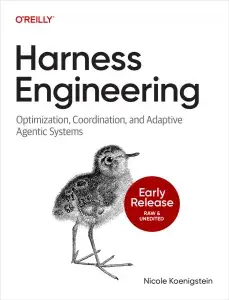
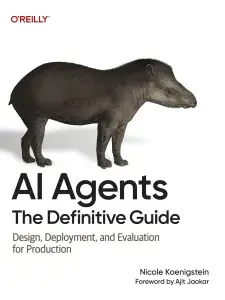
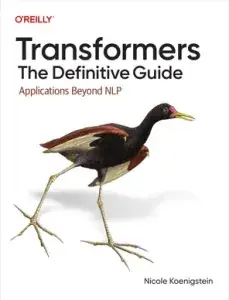
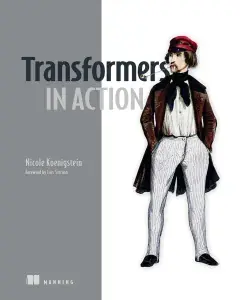
Nicole Koenigstein is an AI researcher and practitioner in agentic systems, focusing on multi-agent architectures, evaluation, safety and long-term system behaviour. She has served as an external evaluator for a European Commission AI Grand Challenge and advised IOSCO on generative AI in regulated environments. She is the author of AI Agents: The Definitive Guide and Transformers: The Definitive Guide (O'Reilly), Math for Machine Learning and Transformers in Action (Manning), and the forthcoming Harness Engineering (O'Reilly).

Ali Parandeh
CEng MIMechE · CEO and Founder, Build Your AI
Ali Parandeh is a Chartered Engineer and AI software engineer. He is the author of Building Generative AI Services with FastAPI (O'Reilly, 2025) and is writing the Building Reliable AI Agents series for Manning. Through Build Your AI he helps engineering organisations take AI from pilot to production.