
Producing an AI roadmap for a specialist acoustic engineering consultancy
A specialist acoustic engineering consultancy had used AI across the team for a year without a shared view of where it should and should not be used. Build Your AI put the first tools into use within a week and gave the directors a ranked plan for what to fund next.
- Client
- Specialist acoustic engineering consultancy
- Sector
- Noise and vibration consultancy
- Engagement
- AI capability building, automation discovery and prototyping, data and governance foundations
- Ladder phase
- Assess & Identify
The numbers
- Prototypes built with the engineers
- 7
- From working sessions to first tools in use
- 1 week
- Manual exclusions matched by the screening tool
- 166 of 171
- A week of sessions and 2 weeks of synthesis
- 3 weeks
- Spent screening each dataset by hand before
- Up to 1 day
- Spent tracing each site plan drawing before
- Up to 1 hr
- Spent drafting a simple proposal before
- 30 min
- Of training before the working sessions
- 1 day
A year of AI use with no consistent approach
The firm serves construction, environmental and renewable energy projects. Its engineers had used AI tools in their daily work for a year, but each person used them in their own way, and the firm wanted a consistent approach it could rely on.
Much of the firm's analysis expertise sat with a few experienced engineers. They had built Python notebooks to speed up data analysis. Each notebook needed Python installed and coding knowledge to run or change, so the wider team could not use them. The firm stored years of measurement data project by project, which prevented any tool from searching across projects.
The director wanted AI to make his staff more effective without replacing anyone. He also wanted processes documented well enough to keep running when everyone was busy. He was wary of spending on tools that staff would leave unused, so the brief had 3 parts. We had to find where AI and automation fit the business, rank the options on evidence with the people doing the work, and prove the approach with early builds.
Our approach
- The engagement started with a training day on how AI behaves, where it fails and how to judge its output. The engineers could then identify where AI fits their own work.
- We ran a week of short working sessions with each engineer. In each session we mapped the engineer's workflow using real files, found where the hours went and where the data was stored, and built a prototype with them.
- Over the following 2 weeks we scored every use case on 1 framework and sequenced the use cases into a roadmap. The framework covers value, confidence and ease, adoption readiness, risk, evidence and fit.
- We put governance in place alongside the builds. It covers how staff may use AI, where the firm's data should live and how the directors keep their systems secure.
We followed 2 principles throughout.
- We designed each tool with the engineer who would use it. The engineers shaped the tools, owned the results and saw their own bottlenecks addressed, which keeps a tool in use after the engagement ends.
- Fixed logic such as fees, lookups and standard ratings went into code. AI handled the reading, the drafting and the suggestion of options for an engineer to check.
First tools in use within a week
Within a week of the sessions the firm had its first tools in use.
| Task | Time before | What changed | Status |
|---|---|---|---|
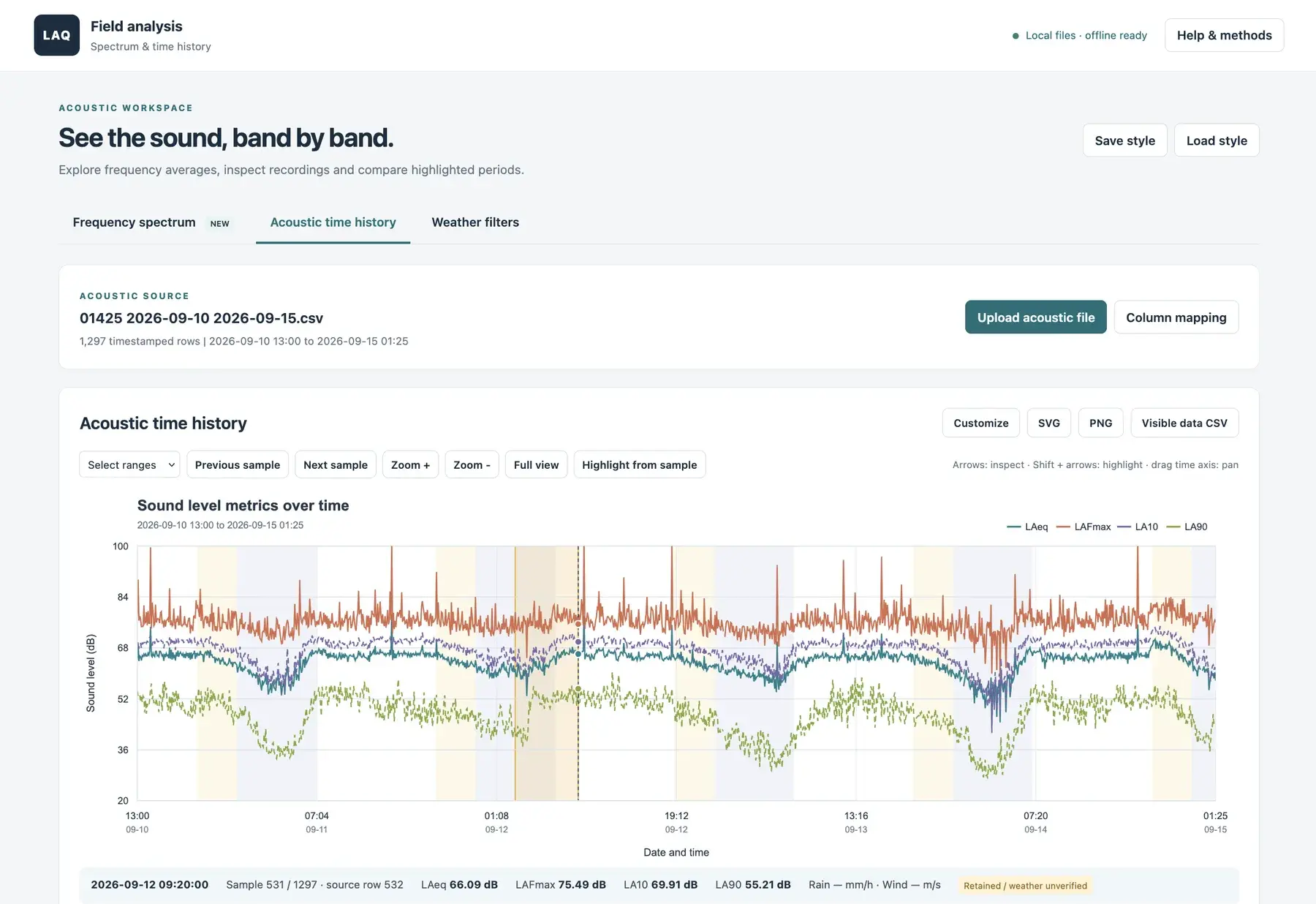
| Running noise time history analysis | Needed Python and coding skills to change | Browser tool any engineer can open | In use |
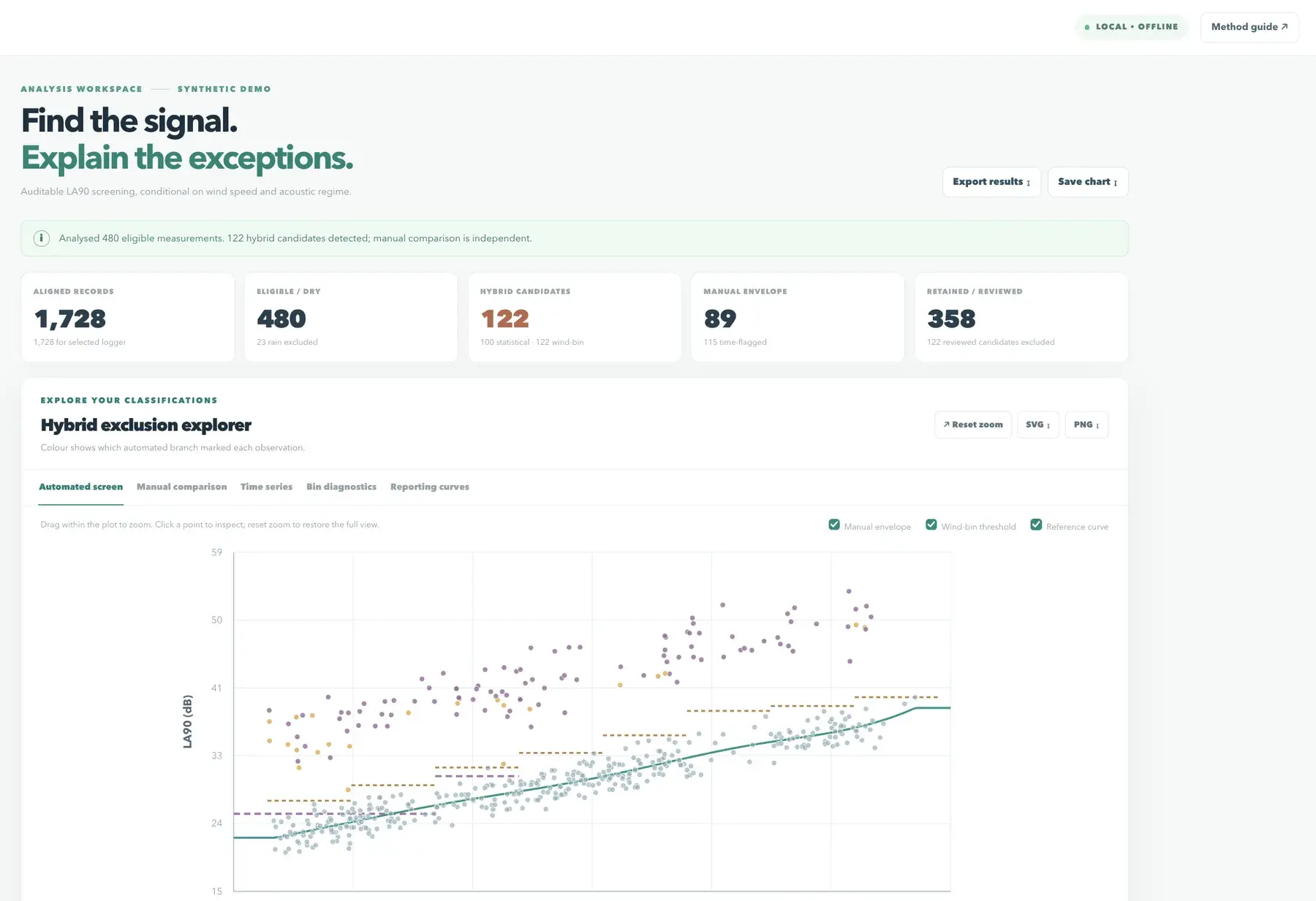
| Screening field monitoring data | Up to a day per dataset | Matched 166 of 171 manual exclusions, each with a reason | Validating on more datasets |
| Tracing buildings from a PDF site plan | Up to 1 hour per drawing | Outlines placed on the map automatically | Prototype, accuracy check under way |
| Drafting a simple proposal | About 30 minutes | Drafts from the firm's own template, with fees and terms confirmed by a consultant | In use |
The engineer who uses the noise viewer most added his own features within days. He reports that the viewer now shows patterns in the data that he could not see before.
At the handover, the directors adopted the roadmap. They chose to start with the shared knowledge layer that every later tool reads from.
The screening and noise analysis tools in detail
| Tool | What it replaced | What the engineer does now |
|---|---|---|
| Field data screening | A separate notebook for each logger, with an engineer removing outliers manually. | The tool plots each dataset against a reference curve and proposes the points to exclude, each with a reason. The engineer accepts or rejects each proposal. |
| Noise time history analysis | A static chart from a Python notebook that only technical staff could run. | Any engineer opens the tool in a browser. They can zoom, inspect the data sample by sample, highlight periods and filter by weather. |
What we delivered
We built 7 prototypes. Each prototype aims at 1 clear gain in 1 person's workflow, and all 7 run on tools the firm already pays for, so the firm owns and runs them. The prototypes include a proposal writer, a pricing calculator, the field data screening tool and a tool that turns PDF site plans into map data.
The firm also received:
- A ranked use case register and roadmap, with a recommendation on what to fund next
- A data catalogue and information architecture for a shared AI knowledge layer, so every tool reads from 1 trusted source
- Standard operating procedures for the workflows that the sessions mapped in enough detail
- Product requirement documents for the larger automations, which need further validation and hardening before production use
- A draft AI use policy
- Security and configuration guides for leadership, written with ISO 27001 and Cyber Essentials controls in mind
Where this pattern applies
The same sequence suits any engineering firm where a few experienced people hold the analysis methods and the data sits in project folders. A week of working sessions is enough to show which tasks repay automation, and the first tools give the directors evidence for the roadmap before they commit a budget.
This work is the Assess & Identify phase of the Safe AI Adoption Ladder, the 4-phase method Build Your AI uses to take an engineering organisation from first interest to AI in production. See how the 4 phases fit together.
Want to know where AI would pay back in your engineering team?
Book a free consultation. We will talk through your workflows and your constraints, and suggest a low-risk first step.
Book a consultationMore case studies
- Safety-critical manufacturingFrom AI interest to a procurement-ready AI roadmap
- Professional registrationCutting Chartership application review from hours to minutes
- Medical educationAVA: an AI mock interview platform for 5,000+ medical applicants
- Professional educationAn AI-powered learning platform for teachers, built from scratch